


Ace Pool Elite
4.5843.00 Reviews
App Specs
- Version
- 1.0.1.2
- Updated On
- License
- Free
- Downloads
- 1,000,000+
- Developer
- execl marocco
- Categories
- Puzzle
- Platform
- Android
Screenshots
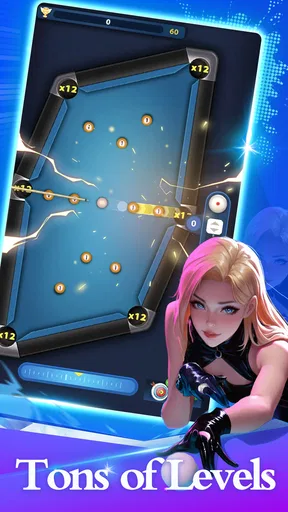
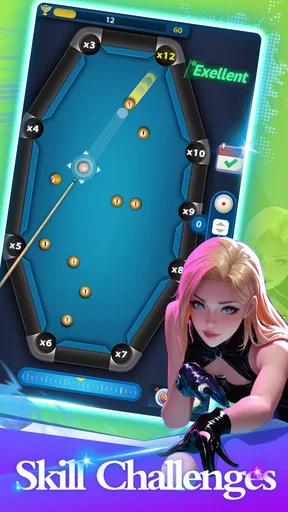
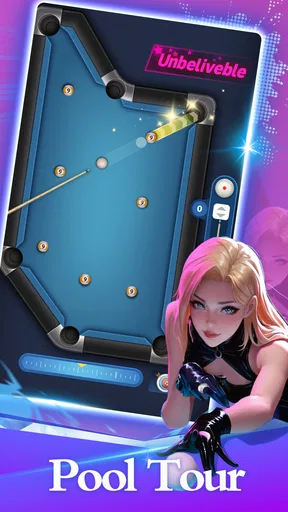

 Analysis by AppCompare
I approached Ace Pool Elite as a quick puzzle game with a clear physical idea: line up the shot, judge the angle, and make precision matter. Its store summary, “Precision in Every Strike!”, is brief, but it points to the part that defines the experience. This is not a game I would open for a long story or a complicated collection system. I would open it when I want a focused challenge that rewards patience more than frantic tapping.
That makes it easy to understand in a few minutes, but not necessarily easy to play well. A pool puzzle can look simple because the table is visible and the objective is obvious. In practice, small aiming errors change the result, and a shot that seems safe can leave an awkward position for the next move. I found the best sessions came from treating each turn as a planning problem rather than trying to clear the table as quickly as possible.
It is a free puzzle game from execl marocco, rated Mature 17+, and it has built a sizeable audience, with more than a million installs and an average score of 4.5 from roughly twelve thousand ratings. Those numbers suggest that the basic formula is connecting with players, although popularity alone does not make it the right choice for everyone. If you enjoy billiards-inspired challenges and prefer short, repeatable sessions, it is worth considering. If you want a full pool simulation with deep competition or a detailed career structure, I would look elsewhere.
How I build a reliable baseline workflow
My first adjustment was to stop treating every shot as an isolated attempt. Before touching the aim, I look at the whole layout and identify the easiest useful sequence. The obvious target is not always the best first target. A ball may be close to a pocket, but sending it away can block the path of another ball or leave the cue ball in an uncomfortable place. Even without a large rulebook, that habit makes the puzzle side much more interesting.
I normally use a three-step routine. First, I choose the ball that gives me the clearest continuation. Second, I trace the likely route of the cue ball after contact. Third, I decide how much force is needed, using the smallest practical amount rather than automatically pulling for a powerful strike. This routine feels slower at the beginning, but it reduces careless restarts and makes the game more predictable.
A realistic everyday use case is a short break between tasks. I can play one or two attempts without needing to remember a complex plot or rebuild a large strategy. However, I would not call it completely mindless. If I am distracted, I tend to rush the alignment and blame the result on bad luck. In reality, the missed shot usually comes from skipping the second step and failing to think about where the cue ball will finish.
For new players, I recommend spending the opening sessions learning the relationship between aim and power instead of chasing fast clears. A gentle shot is often more informative than a hard one because it shows how accurately the line was chosen. Once that feels comfortable, stronger shots become a deliberate tool rather than a guess. This is one of the most useful habits I developed while playing.
Worth Reading Before You Choose

EA SPORTS FC Mobile 26 Is a Bigger Football Game, but It Takes Time

Flipboard Shows What News Apps Must Do Beyond the Feed

Switching to Android Auto Means Rethinking Your Driving Routine

Google Calendar Makes a Crowded Week Easier to Manage

Ludo King Makes the Most of the Minutes Between Plans

Baby Panda World Brings Quick Play to Modern Phones, but Its Game Library Feels Busy
Read the table before touching the controls
The most valuable information is already on the table. I look for crowded areas, narrow pocket approaches, and balls that can serve as obstacles after a collision. When several options appear similar, I choose the one with the least complicated follow-up. That is especially helpful when I am playing on a small screen, where a long planning process can become tiring.
I also avoid making a shot simply because it is available. A successful pocket is not automatically a good move if it leaves the next attempt harder. The game becomes more satisfying when I judge a shot by its consequences. This changes the experience from tapping targets into arranging a sequence of manageable decisions.
Another practical habit is to pause mentally before the final release. I check the contact point, the intended pocket, and the expected stopping area. That final check catches many errors caused by moving the aim while adjusting power. It takes only a moment and is more useful than repeatedly firing and hoping the next attempt works.
Settings and controls worth checking early
The current release is version 1.0.1.2, and it runs on Android 7.0 or later. Before settling into longer sessions, I would check the available in-game settings and make sure the controls feel comfortable on the device. I am deliberately not treating a setting as essential unless it is visible in the installed version, because the important point is personal control: aiming should feel deliberate, not slippery or tiring.
Screen size makes a noticeable difference to this type of game. On a compact phone, I prefer short movements and frequent visual checks rather than dragging across the entire display in one motion. On a larger screen, I can make broader adjustments, but I still avoid overcorrecting. If the aim keeps passing the intended line, smaller movements are usually better than increasing sensitivity or trying to compensate with power.
I also suggest checking sound and notification behavior before playing in public or during a work break. A puzzle game can be relaxing with audio, but it should not force you to play loudly to understand what is happening. If the device is shared with other people, silent play is the more considerate choice. These details do not change the rules, yet they affect whether the game fits naturally into daily use.
Players should also remember the age classification. The Mature 17+ label is part of the app’s store information, so I would not install it on a child’s device simply because the gameplay looks like a harmless pool puzzle. Parents should check the listing and the device’s own controls before allowing access. That is a practical responsibility, especially when a game’s visual style might suggest a younger audience than its classification does.
Faster patterns that do not sacrifice accuracy
Speed comes from removing unnecessary decisions, not from releasing the cue immediately. After a few sessions, I began grouping shots into familiar patterns: a direct pocket, a bank-style angle, a crowded contact, or a setup shot that mainly improves the next position. Naming the situation in my head helps me choose a plan quickly without pretending that every table is identical.
For direct shots, I focus on the contact line and keep the power modest. For angled shots, I spend more time on the route and less time trying to force the ball into the pocket. When the table is crowded, I prioritize control over clearance. This approach produces fewer dramatic shots, but it also creates more repeatable results. In a puzzle game, repeatability is often more valuable than a single impressive attempt.
One useful trade-off is accepting an imperfect position when it protects the next two moves. A player who always seeks the cleanest immediate pocket may create a difficult finish. I would rather take a slightly less attractive shot if it opens space or leaves a broad angle afterward. That is a subtle change, but it is where the game begins to feel like a real planning exercise rather than a basic aiming test.
I also recommend separating practice from performance. During an exploratory attempt, I test how much force is needed and observe the result. During a serious attempt, I use what I learned instead of changing several variables at once. If I alter the aim, strength, and intended route together, I cannot tell which decision caused the outcome. Keeping one variable stable makes improvement much faster.
Where the puzzle format reaches its limits
The focused design is also its main limitation. I would not choose this game when I want the social pressure of live multiplayer, a realistic training simulator, or the variety of a large sports package. Its appeal depends on enjoying repeated precision challenges. Players who need constant novelty may find the core interaction narrow after the initial learning period.
There is also a mental limit to short-session puzzle play. When I miss the same type of shot several times, frustration can make my aim worse. At that point, continuing is usually counterproductive. I get better results by taking a break and returning with a fresh view of the table. That is not a flaw unique to this title, but its precise control makes impatience especially visible.
The Mature 17+ classification may also make it unsuitable for some households, regardless of how accessible the pool theme appears. Likewise, the minimum operating-system requirement of Android 7.0 or later means owners of older devices should not assume compatibility. For someone choosing between this and a conventional pool game, the decision comes down to priorities: this is better for compact puzzle decisions, while a dedicated simulation may be better for rules, realism, and longer-form play.
I would also skip it if my main goal were a broad progression system. The information available around the game identifies it as a puzzle title, and that is how I evaluate it: as a sequence of precision problems. I would not download it expecting a full sports-management experience, a narrative campaign, or a substitute for playing pool with friends. It works best when its narrow focus is exactly what I want.
Who gets the most from repeated practice
Experienced users can make the game feel faster by standardizing their routine. I keep the same order of checks, use conservative power when uncertain, and judge success by the next position instead of the current pocket alone. These habits reduce random experimentation and make each failed attempt informative. They also help answer a common question: does practice actually matter here? In my experience, yes, but mainly because it improves decision quality rather than simply building reflexes.
The game is a good match for people who enjoy visual geometry, controlled timing, and small improvements. It suits a commuter, a casual puzzle player, or someone who likes billiards but does not want to commit to a long match. It is less suitable for players who dislike restarting, who prefer automatic guidance, or who want every session to introduce a completely different mechanic.
Because it is free, the barrier to trying it is low, but I still recommend judging it by the first several focused sessions rather than a single rushed attempt. The first session teaches the controls; later sessions reveal whether planning the table is enjoyable. If I am still forcing shots after I understand the basic movement, that tells me the game’s central rhythm is probably not for me.
My verdict after treating it as a precision puzzle
Ace Pool Elite is strongest when I play it slowly enough to make each strike intentional. Its pool setting gives familiar actions a puzzle structure, and the simple premise leaves room for useful habits: scan the layout, protect the next position, control power, and change one decision at a time. Those are practical techniques, not just generic encouragement, and they make the experience more rewarding than rapid tapping.
I appreciate that it can fit into a short break while still offering enough depth for careful players. The audience size and 4.5 average rating show that many people find the formula appealing, but my recommendation is more specific. I would suggest it to anyone who wants a free, billiards-themed puzzle game built around accuracy and repeatable improvement. I would not suggest it to someone looking for a complete pool simulator, a strong social component, or a broad adventure.
The best way to approach it is as a small training ground for decision-making. Do not chase power when alignment is the real problem, do not judge a shot only by whether it reaches a pocket, and do not keep playing while frustration is replacing observation. With those expectations, the game’s narrow focus becomes a strength. It gives me one clear question on every turn: can I make the next strike more precise than the last?
Pros
- Smooth controls make aiming and shot placement feel responsive.
- Multiple game modes provide variety beyond standard pool matches.
- Clean visuals keep the table
- balls
- and aiming guides easy to follow.
- Short matches work well for quick gaming sessions.
- Progression and unlockable content add motivation to keep playing.
Cons
- Some advanced features may require in-app purchases or extra progression.
- Online matchmaking quality can vary depending on player availability.
- The aiming assistance may feel too generous for experienced players.
- Repeated matches can become predictable after extended play.
- Ads may interrupt the experience for users on the free version.
FAQs for Ace Pool Elite
What is Ace Pool Elite, and how does the game work?
Ace Pool Elite is a pool game focused on realistic table play, competitive matches, and skill-based shot control. After installing it, players can practice aiming, adjust power and spin, and compete in different match formats. The game is designed for both casual sessions and more serious progression, although the exact modes, rules, and available features may vary depending on the version and device.
Can I play Ace Pool Elite offline, or is an internet connection required?
Some pool games allow practice or single-player matches without an internet connection, while online competitions, account features, leaderboards, advertisements, and cloud synchronization normally require access to the internet. Before downloading, users should check the store description and test the available modes after installation. An offline connection may also limit rewards, matchmaking, updates, and access to certain competitive content.
Is Ace Pool Elite free to download, and does it include in-app purchases?
Ace Pool Elite may be available as a free download, but users should review the store listing carefully because free-to-play games often include optional purchases. These can involve coins, cosmetic items, extra attempts, progression boosts, or other virtual content. Purchases are not always necessary to enjoy the basic game, but spending limits and device-level purchase protections are recommended, especially when children use the device.
What devices are compatible with Ace Pool Elite?
Compatibility depends on whether you are using Android or iOS, as well as the operating-system version, processor, available storage, and screen configuration. Before installing Ace Pool Elite, check the official app-store page for the minimum requirements and the latest supported versions. Keeping enough free space is important because the initial download may not include every resource, update, or additional game file.
Is Ace Pool Elite suitable for beginners, and does it contain advertisements?
Ace Pool Elite can be approachable for beginners if its tutorial, practice tools, and aiming controls are used before entering competitive matches. New players may still need time to learn power control, angles, spin, and table positioning. Depending on the release and region, the game may display advertisements, particularly between matches or when claiming optional rewards, so the store information should be checked before downloading.


